March 2026

Issue 22

£9.99
Tax included.
Type: Print Edition

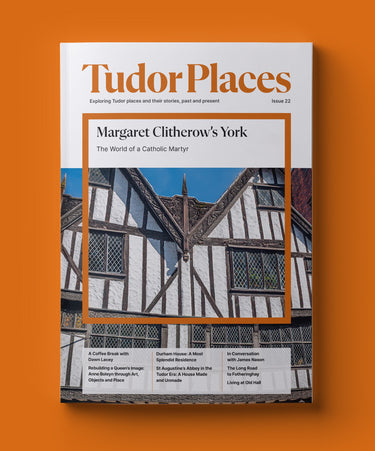
In Issue 22 of Tudor Places, we explore the streets and spaces of Elizabethan York, the world inhabited by Margaret Clitherow who grew up in a city shaped by the religious upheavals of the English Reformation and eventually became one of its most venerated martyrs.

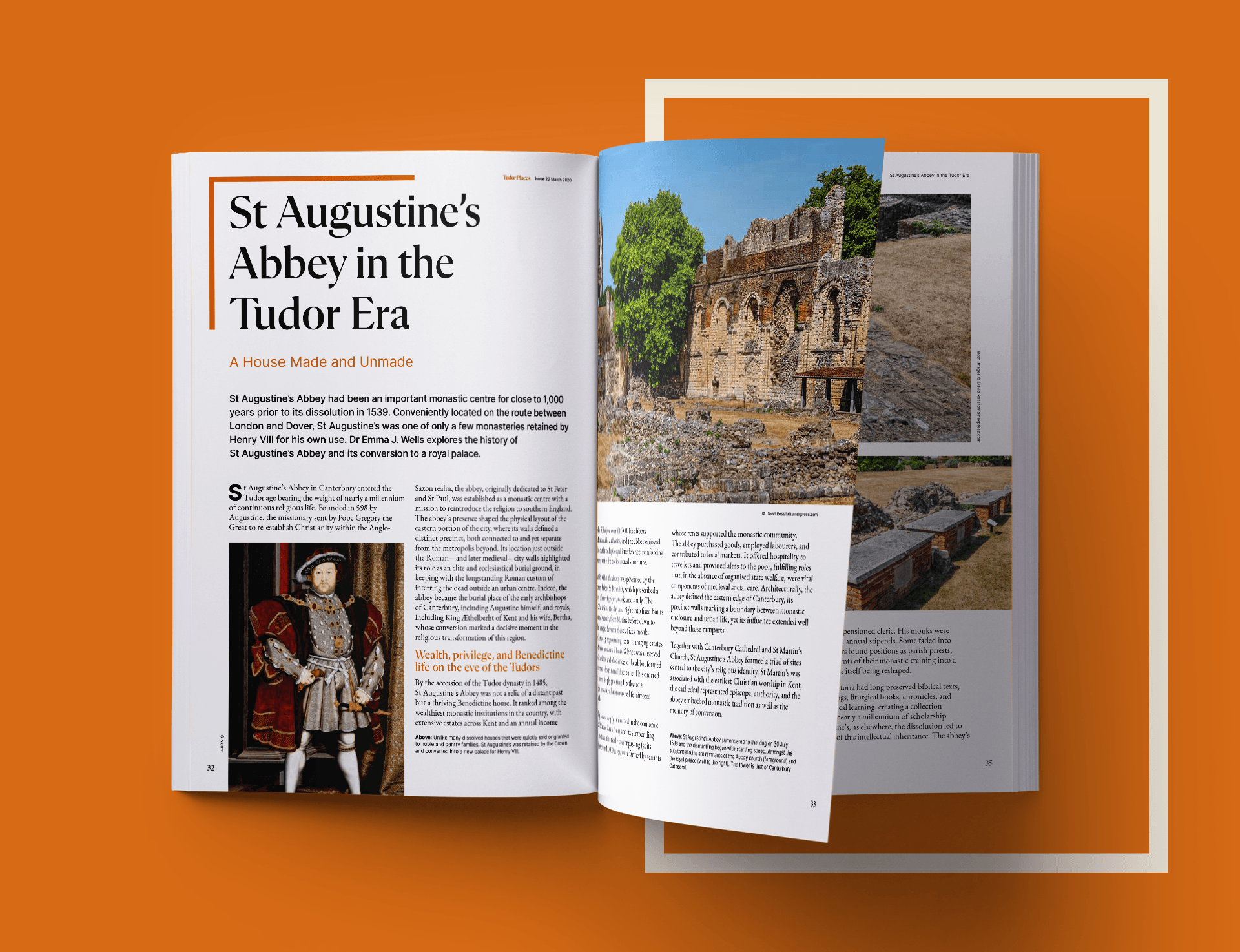
We trace the long history of St Augustine’s Abbey in Canterbury, an important monastic centre on the London to Dover route that Henry VIII retained for his own use after the Dissolution of the Monasteries and we learn about Durham House, one of the great houses built along the Strand in London for bishops and courtiers that was also briefly in royal ownership.

We consider Anne Boleyn’s material culture, the objects she owned, the spaces she shaped and the emblems and architectural language she used, to understand more about how Anne sought to portray herself.

We have interviews James Nason who, with his wife Rowena Colthurst, owns Pitchford Hall in Shropshire, about the rescue and restoration of this Grade-I listed half-timbered house, and with Dawn Lacey about her role as a National Trust Living History Interpreter at Little Moreton Hall, another wonderful half-timbered house in Cheshire.

With Sarah, The Tudor Travel Guide, we follow Mary, Queen of Scots through the long years she spent in England, from Workington Hall to her execution at Fotheringhay Castle. In Living at Old Hall, Brigitte Webster reflects on how the Tudor house has shaped her future, while in Last Place, Dr Christina J. Faraday shares her favourite Tudor places.

Type: Print Edition

Articles include

Margaret Clitherow's York: The World of a Catholic Martyr

Margaret Clitherow grew up in a York marked by the religious upheavals of the English Reformation, eventually becoming one of the city’s most venerated martyrs. Her conversion to Catholicism in the 1570s and her clandestine efforts to shelter priests placed her at the heart of the city’s fierce religious struggles. Dr Rachel Delman explores the streets and spaces Margaret once inhabited, contemplating how her life continues to shape the city’s spiritual and historical landscape today.

St Augustine's Abbey in the Tudor Era: A House Made and Unmade

St Augustine’s Abbey had been an important monastic centre for close to 1,000 years prior to its dissolution in 1539. Conveniently located on the route between London and Dover, St Augustine’s was one of only a few monasteries retained by Henry VIII for his own use. Dr Emma J. Wells explores the history of St Augustine’s Abbey and its conversion to a royal palace.

Durham House: A Most Splendid Residence

Durham House was one of the thirteen great houses built for bishops and courtiers on the Strand, the main route from the city of London to royal Westminster. Owned by the see of Durham, and, for a time, the Crown, it is connected to many of the most prominent members of the Tudor court. Dr Elizabeth Norton explores the history of this once magnificent, and now long-gone, episcopal and royal mansion.

Rebuilding a Queen's Image: Anne Boleyn through Art, Objects and Place

Whilst Anne Boleyn’s face is iconic yet strangely elusive, with the paucity of portraits from her lifetime fuelling the debate about what she looked like, much more survives of her cultural material. Dr Own Emmerson argues that examining the objects Anne owned, the spaces she shaped, and the emblems, mottos, and architectural language she used, tells us much about the image of herself that Anne wished to project.

In Conversation with James Nason

Pitchford Hall in Shropshire is one of England’s finest surviving Tudor half-timbered houses. In 2016, after nearly twenty four years of neglect, the house came back into the hands of the family who have owned Pitchford estate since the fifteenth century, when James Nason and his wife, Rowena Colthurst, purchased the near-derelict property. We spoke to James about the rescue, restoration, and day-to-day realities of living in, and caring for, this Grade I listed home.

The Long Road to Fotheringhay

Sarah, The Tudor Travel Guide, takes us on a journey told in stone tracing the long, difficult years Mary, Queen of Scots spent in England — from Workington Hall in Cumbria, where she first set foot on English soil, to Fotheringhay Castle in Northamptonshire, the site of the final act in this Scottish tragedy. It is a story of tightening control, shifting calculations in Elizabeth I’s council, and of a queen who remained, to the last, a potent symbol of Catholic resistance and dynastic threat.

Get started with a taster bundle

The taster bundle includes 3 issues of Tudor Places magazine jam-packed with articles on palaces, castles, cathedrals, manor houses, churches, military forts and more!

View bundle